Organic Lavender Essential Oil — Provence, France (Lavandula angustifolia) — 15 ml
- Regular Price
- $ 25.99
- Sale Price
- $ 25.99
- Regular Price
Sold Out
- Unit Price
- per
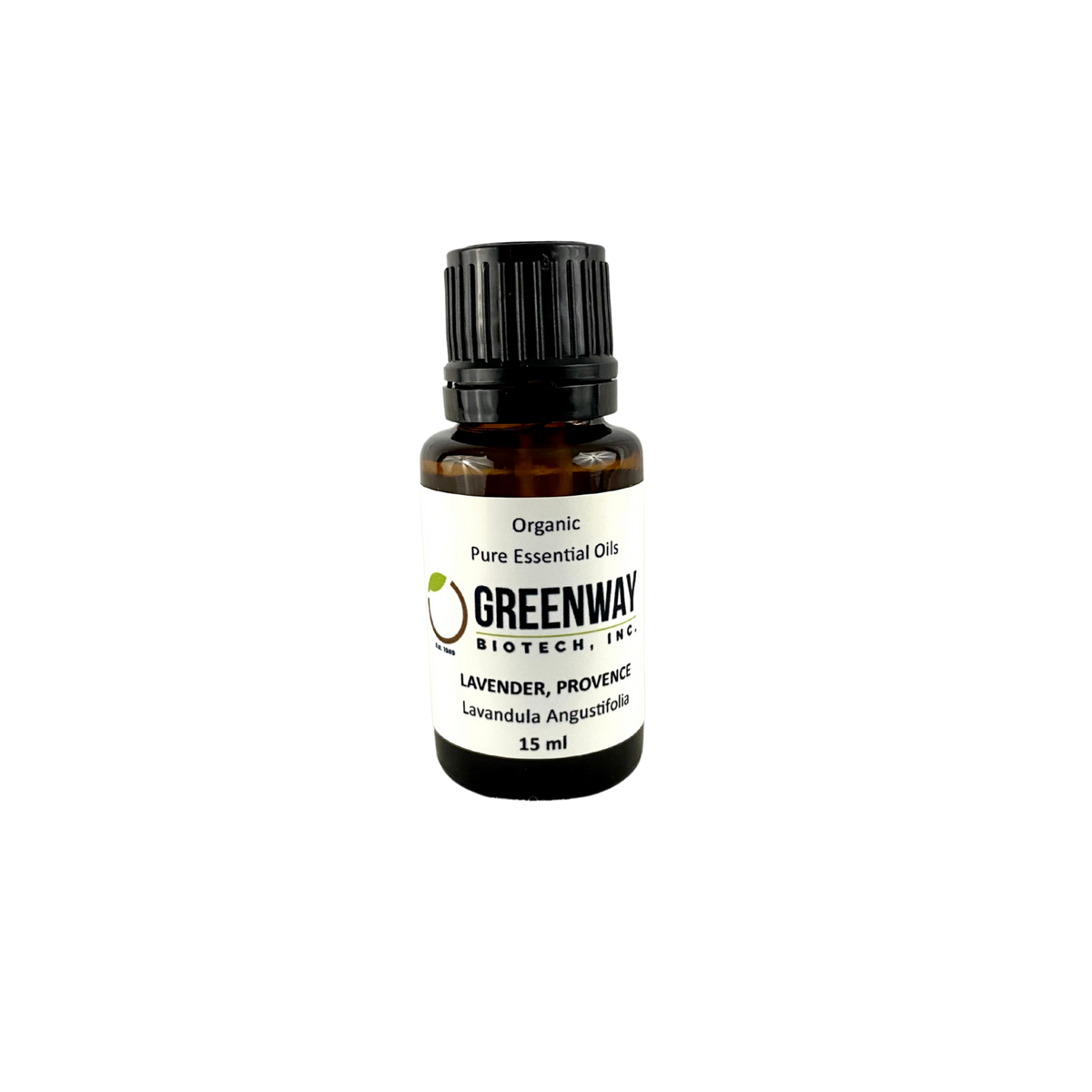
100% pure organic Lavandula angustifolia (true lavender), steam-distilled from flowering tops grown in Provence, France. A soft floral middle note for evening diffusing, skincare blends, and DIY pillow sprays — the most versatile and well-tolerated oil in aromatherapy, and the universal blending partner across every aroma family.
Find your size → See how to use itShips from California · 90-day guarantee · GC/MS available on request
100%
Pure organic Lavandula angustifolia
15ml
≈ 300 drops per bottle
25-45%
Linalyl acetate — the soft floral signature
2-4yrs
Shelf life sealed in a cool dark place
Lavender is used in small amounts — 3 to 5 drops in a diffuser, 6 to 15 drops in a tablespoon of carrier — and stored properly it keeps its character for two to four years. A single 15 ml bottle stretches across many evening routines.
| Size | Typical Duration | Uses per Bottle | Best For |
|---|---|---|---|
| 15 ml dark amber glass | 1-2 years (typical home use) | ~300 drops | Best starter size |
| Product Type | Single-origin essential oil |
|---|---|
| Size | 15 ml (≈ 300 drops) dark amber glass with euro dropper cap |
| Key Ingredient | True Lavender Oil (Lavandula angustifolia) — the original species, not the lavandin hybrid |
| Source / Origin | Certified-organic lavender fields in Provence, France |
| Grade / Purity | 100% pure, certified organic, GC/MS verified — no fillers, no carrier oils, no synthetic fragrance |
| Aroma | Fresh, floral, herbaceous — the classic lavender scent with sweet undertones and a soft, calming character |
| Aromatic Note | Middle note — provides body and balance; bridges top notes with base notes in blends |
| Extraction | Steam distillation from flowering tops at peak bloom |
| Phototoxic | No — no UV avoidance window required after topical use |
| Max Topical Dilution | 3% (~10-15 drops per tablespoon of carrier oil) |
| Safety | One of the gentlest essential oils; non-phototoxic and well-tolerated. Always dilute before topical use. See Safety section below for full guidance. |
Lavender earns its cabinet-cornerstone reputation through diffusing, skincare, and natural home care — anywhere a soft floral middle note adds balance to a routine.
Three to five drops in a bedside diffuser run for 30-60 minutes before sleep. One to two drops on a tissue tucked inside a pillowcase. The most-reached-for evening aromatherapy oil for a reason.
Three to five drops in a diffuser for daytime calm. Lavender bridges between bright top notes and grounding base notes — anchors balanced blends across most rooms.
Six to eight drops per tablespoon of carrier oil for the face, ten to fifteen for body. One of the gentlest essential oils in DIY skincare — popular in facial serums, after-bath body oils, and balancing moisturizer blends.
Ten to fifteen drops in 4 oz water with an emulsifier (witch hazel works well). Shake before each use; lightly mist pillows and linens. Popular for travel and hotel rooms too.
Fifteen to twenty drops per 16 oz water spray with an emulsifier. The fresh floral aroma deodorizes surfaces while it cleans. The most pleasant DIY-cleaning EO.
Two distinctions matter when sourcing lavender oil. First: L. angustifolia (true lavender), not L. x intermedia (lavandin) — the hybrid is cheaper but sharper and more medicinal. Second: Provence, not generic origin — the climate and altitude shape the oil's balance.
Sourced from certified-organic lavender fields in Provence — the high-altitude Mediterranean region that defines the global standard for L. angustifolia. The fields bloom June through August and the oil is steam-distilled at peak bloom. Provence's climate produces an oil with notably softer character and higher linalyl acetate content than lavender grown elsewhere.
True lavender is the original species. Lavandin (L. x intermedia) is a hybrid bred for higher oil yield — cheaper to produce, but with more camphor (sharper, more medicinal) and lower linalyl acetate (the soft-floral signature compound). For evening aromatherapy and gentle skincare, the angustifolia profile is meaningfully different.
Linalyl acetate is the ester primarily responsible for the soft, sweet, slightly fruity character that distinguishes true lavender from sharper lavandin or rosemary. Combined with linalool (25-38%), the two compounds anchor the oil's calming aromatic profile. Provence-grown angustifolia consistently shows higher linalyl acetate than lavender from warmer or lower-altitude regions.
What's in the bottle is steam-distilled Lavandula angustifolia flowering-top oil and nothing else. No synthetic additives, no carrier oils diluting the active material, no fragrance oils mimicking the aroma. Lavender is one of the most commonly adulterated essential oils on the global market — typical adulterations include cutting with lavandin or with synthetic linalool. GC/MS verification matters here.
Each batch is independently analyzed by GC/MS to verify the constituent profile (linalool, linalyl acetate, lavandulol, terpinen-4-ol, β-caryophyllene) and screen for adulterants and species substitution. Lot-coded for traceability — any bottle can be tracked back to its source.
Distilled in Provence, hand-filled and inspected at our family-owned facility in Madera, California. Two to four year shelf life sealed in dark amber glass. Backed by a 90-day money-back guarantee on every bottle.
50-83% combined
The two monoterpene compounds that define true lavender
True lavender essential oil is dominated by two compounds in a near-balanced ratio: linalool (25-38%), a monoterpene alcohol, and linalyl acetate (25-45%), an ester of linalool with acetic acid. Together they typically account for half to three-quarters of the oil by weight. The ratio between them — roughly 1:1 in premium Provence lavender — is what makes the aroma read as "lavender" rather than as something sharper or more medicinal. Tip too far toward linalool and the oil reads as raw and rosemary-adjacent; tip toward linalyl acetate and it reads as soft and almost fruity. Provence-grown angustifolia consistently lands in the sweet spot.
The supporting cast rounds out the body. Lavandulol and lavandulyl acetate — named for the plant itself — add the characteristic herbaceous-floral signature. Terpinen-4-ol contributes a soft woody note. β-Caryophyllene, a sesquiterpene also found in black pepper, anchors the lower-volatility tail and gives the oil more staying power than most middle notes. 1,8-cineole (camphor-like) appears in trace amounts in true lavender; the higher it goes, the more the oil starts behaving like lavandin or spike lavender.
Practical implications. Lavender is one of the best-tolerated essential oils across most skin types and is non-phototoxic — no UV-avoidance window required. That said, modern aromatherapy practice recommends dilution for all topical use. While lavender is sometimes referenced as "safe undiluted" in older literature, documented contact-sensitization cases (particularly with oxidized oil) have led safety authors like Tisserand & Young to recommend dilution as standard practice. Cap tight, dark glass, and reasonable rotation will handle the rest.
Constituent ranges below reflect typical batch profiles for steam-distilled Provence Lavandula angustifolia. The current-batch GC/MS report is available on request.
The monoterpene alcohol that carries lavender's freshness. Also dominant in many other floral oils and one of the most common compounds across plant aromatic profiles. Contributes the bright, slightly herbal first impression.
The ester that softens linalool's edges and gives true lavender its characteristic sweet, slightly fruity quality. The compound that most clearly distinguishes L. angustifolia from lavandin or spike lavender.
Named for the plant itself. A monoterpene alcohol with a soft herbaceous-floral character — part of what makes lavender smell unmistakably like lavender rather than a generic floral.
A monoterpene alcohol also found in tea tree oil. Contributes a soft woody-spicy undertone that adds depth to the lower-volatility tail.
A sesquiterpene also found in black pepper and clove. Adds slight peppery-woody depth and helps the oil hold its character longer than most middle notes.
The compound that dominates eucalyptus. In true Provence lavender it appears in trace amounts; higher cineole percentages indicate adulteration with lavandin or substitution with spike lavender.
Safety note: while lavender is one of the gentlest essential oils with no documented phototoxicity, modern aromatherapy practice recommends dilution for all topical use. Documented contact sensitization (rare, generally with oxidized oil) has led safety authorities like Tisserand & Young to recommend dilution as the default rather than the exception. Consult a healthcare provider before topical or diffused use during pregnancy. Cats lack the liver enzymes to metabolize many essential-oil constituents — do not apply to pets.
| Botanical Name | Lavandula angustifolia Mill. |
|---|---|
| Common Names | True Lavender, English Lavender, Common Lavender, Narrow-Leaf Lavender |
| Plant Part Used | Flowering tops (harvested at peak bloom) |
| Extraction Method | Steam distillation |
| Country of Origin | France — Provence (certified organic) |
| Grade | 100% pure, certified organic, GC/MS verified |
| Color & Appearance | Pale yellow to colorless, mobile liquid |
| Aroma Profile | Fresh, floral, herbaceous — sweet, soft, slightly camphoraceous undertones |
| Aromatic Note | Middle note (with above-average staying power thanks to β-caryophyllene tail) |
| Primary Constituents | Linalool (25-38%) and linalyl acetate (25-45%) |
| Net Volume | 15 ml (≈ 300 drops) |
| Container | Dark amber glass bottle with euro dropper cap and tamper-evident seal |
| Phototoxicity | Non-phototoxic — no UV avoidance window required |
| Maximum Topical Dilution | 3% (Tisserand & Young, 2014) — always dilute |
| Shelf Life | 2-4 years when stored sealed in a cool, dark place |
| Packaged At | Greenway Biotech facility, Madera, California |
| Testing | Third-party GC/MS verification per batch; lot-coded for traceability |
Three primary use methods. Topical drop counts stay within the 3% maximum from Tisserand & Young (2014). When in doubt, use less.
Quick answer: 6-8 drops per tablespoon of carrier oil for face (~1.2-1.6%); 10-15 drops for body (~2-3%). Always dilute. Patch test first.
| Use | Lavender Drops | Carrier Volume | Approx. Dilution |
|---|---|---|---|
| Facial serum (daily) | 6-8 drops | 1 tbsp (15 ml) | ~1.2-1.6% |
| Body oil / massage blend | 10-15 drops | 1 tbsp (15 ml) | ~2-3% |
| Scalp pre-wash treatment | 5-8 drops | 2 tbsp (30 ml) | ~0.5-0.8% |
| Add to existing moisturizer | 2-3 drops | 1 oz cream/lotion | ~0.3-0.5% |
| Children 2+ (with pediatrician guidance) | 5-7 drops | 1 tbsp (15 ml) | ~1% (half adult) |
Always dilute. While lavender is sometimes referenced as "safe undiluted," modern aromatherapy practice recommends dilution for every topical use — documented contact-sensitization cases (particularly with oxidized oil) make this the safe default. Suitable carriers: jojoba (face), rosehip seed (facial serums), sweet almond (body massage), fractionated coconut (roller bottles). Patch test on the inner forearm and wait 24 hours before broader use.
Quick answer: 3-5 drops in a diffuser for medium rooms; 10-15 drops in a 4 oz water + emulsifier spray for pillows; 1-2 drops on a tissue tucked in a pillowcase.
| Method | Lavender Drops | Base / Duration | Notes |
|---|---|---|---|
| Small room diffuser | 2-3 drops | 20-30 min | Bathroom, closet, small office |
| Medium room diffuser (bedroom) | 3-5 drops | 30-60 min before bed | Bedroom — the most popular lavender setting |
| Large room diffuser | 5-7 drops | 40-60 min | Living room, open kitchen |
| Pillow / linen spray | 10-15 drops | 4 oz water + emulsifier | Add ½ tsp polysorbate 20 or witch hazel; shake before each use; mist lightly |
| Tissue inhalation | 1-2 drops | As needed | Tuck inside a pillowcase or carry in pocket |
Starter evening blend: 3 drops Lavender (middle) + 2 drops Sweet Orange (top) + 1 drop Patchouli (base). Diffuse 30-60 minutes before bed.
Quick answer: 15-20 drops per 16 oz water + emulsifier for cleaning spray.
Essential oils don't mix with bathwater, so we don't recommend adding them to a bath or to bath salts.
Lavender is genuinely well-tolerated for most skin types, but it isn't a license to skip the basics. Four habits make this oil reliable across a 2-4 year shelf life.
Older aromatherapy references sometimes say lavender is safe undiluted; modern practice recommends dilution as the default. Documented contact-sensitization cases (rare but real, particularly with oxidized oil) are why Tisserand & Young set 3% as the recommended maximum. For facial blends, stay under 1.5%; for body, under 3%. The 6-15 drops per tablespoon range in the section above covers normal use.
Mix 1 drop of lavender in 1 tablespoon of carrier oil. Apply a small amount to the inner forearm and wait 24 hours. If no redness, itching, or burning appears, the dilution is workable for you. Re-test after long storage gaps — oxidized lavender can irritate skin that fresh oil didn't.
Lavender stores well — 2 to 4 years sealed — but the two enemies are air and UV light. The dark amber glass bottle handles light; you handle air by capping the bottle tightly after every use and not decanting into larger half-empty bottles. Write the open-date on the label to track freshness.
Do not apply on or near the face of infants. For children 2 and older, use at half the adult dilution rate with pediatrician guidance. Cats lack the liver enzymes to metabolize many essential-oil constituents — do not apply to pets and keep diffusing areas ventilated with an exit route for animals. Consult your healthcare provider before topical or diffused use during pregnancy or while nursing.
Lavender is a middle note that punches above its weight. Most middle notes fade faster than base notes — but the β-caryophyllene tail in true lavender gives it more staying power than oils like geranium or rosemary. That's part of why lavender works so well as a "universal middle" in blending.
The two real authenticity tests for true lavender are high linalyl acetate (25-45%) and low camphor (1,8-cineole under 1%). Lavandin and spike lavender both fail the second test — they read sharper and more medicinal in a side-by-side smell.
For aromatherapy use. Dilute before topical application. Keep out of reach of children. Essential oils are not intended to diagnose, treat, cure, or prevent disease.
"Lavender" on a label can mean different species with different aromatic and behavioral profiles. This is how true Provence angustifolia sits next to the alternatives and the most-used companion oils.
| Oil | Primary Compounds | Aroma Character | Max Topical | Best For |
|---|---|---|---|---|
| True Lavender (L. angustifolia) (this product) | Linalool 25-38% + linalyl acetate 25-45% | Soft, sweet, floral, gentle | 3% | Bedtime, skincare, gentle skincare, universal blending |
| Lavandin (L. x intermedia) | Higher camphor; lower linalyl acetate | Sharper, more medicinal, camphoraceous | ~3% | Cleaning, gardening, cheaper substitute (not the same character) |
| Spike Lavender (L. latifolia) | Higher 1,8-cineole; linalool | Camphor-forward, sharp, eucalyptus-leaning | ~3% | Respiratory aromatherapy (not for sleep/skincare use) |
| Egyptian Geranium | Citronellol + geraniol 34-50% | Rich rosy-floral, herbaceous | 1.5% | Skincare blends; rose-adjacent middle note |
| Sweet Orange | Limonene >90% | Warm, sweet, rounded citrus | 2.5% | Top-note partner; the #1 lavender pairing |
Honest sorting — lavender does most things well, which is exactly why it's the cabinet cornerstone. Here's when it's the right pick and when it isn't.
Lavender's whole identity is "blends with everything" — which makes the question more about your goals than about the oil itself. These three are the most-reached-for partners across diffusing and skincare.
The #1 lavender pairing — warm sweet citrus lifts lavender's floral middle into one of aromatherapy's most universally liked blends. Non-phototoxic, so daytime use is in.
Essential OilAn earthy base note that grounds lavender's floral brightness. Together they create rich, complex evening diffuser blends and natural perfumes with real staying power.
Essential OilA cooling top-note partner that balances lavender's softness. Popular for post-activity massage blends and clean-air diffusing combinations.
Lavender is one of the gentlest essential oils available, but "gentle" is not "no rules." A short safety profile worth keeping in mind.
If your question isn't here, contact our team at questions@greenwaybiotech.com.
Yes. Our lavender essential oil is 100% pure, certified-organic Lavandula angustifolia from Provence, France. It contains no synthetic additives, fillers, fragrance oils, or preservatives. It is steam-distilled from flowering tops and hand-bottled at our family-owned Madera, California facility.
Fresh, floral, and herbaceous — the classic lavender scent with sweet, slightly camphoraceous undertones and a soft, calming character. Provence-grown L. angustifolia is known for its exceptionally balanced profile — softer and more nuanced than the lavandin hybrid, less sharp than spike lavender. As a middle note, it provides body and balance in blends and lasts longer than most other middles thanks to its β-caryophyllene content.
True lavender (Lavandula angustifolia) — what we sell — is the original species, with higher linalyl acetate content (25-45%) that gives it a softer, sweeter, more complex aroma. Lavandin (L. x intermedia) is a hybrid bred for higher oil yield — cheaper to produce, but with more camphor and less linalyl acetate, which makes it sharper and more medicinal. For evening aromatherapy, gentle skincare, and universal blending, true lavender is meaningfully different.
Lavender is the most widely used essential oil for evening and bedtime aromatherapy routines. Research suggests inhaling lavender aroma may help support feelings of relaxation and the subjective quality of an evening wind-down. Try diffusing 3-5 drops for 30-60 minutes before bed, or place 1-2 drops on a tissue tucked inside your pillowcase. Essential oils are not intended to diagnose, treat, cure, or prevent any condition — including sleep disorders.
Maximum topical dilution is 3%. For face and neck, use 6-8 drops per tablespoon of carrier oil (around 1.2-1.6%). For body and massage, use 10-15 drops per tablespoon (around 2-3%). Add 2-3 drops to one ounce of existing moisturizer or lotion for a much lower (~0.3-0.5%) blend. Always dilute before topical use — while older aromatherapy literature sometimes references lavender as safe for undiluted spot application, documented contact-sensitization cases (particularly with oxidized oil) have led safety authors like Tisserand & Young to recommend dilution as the default. Patch test on the inner forearm before broader use.
Lavender is one of the gentlest essential oils, but caution still applies. Do not apply any essential oil on or near the face of infants. For children 2 and older, use at half the adult dilution rate (around 1%) and avoid applying near the face. Always consult a pediatrician before using essential oils on or around children.
No. Lavender is non-phototoxic, meaning you do not need to avoid sunlight after topical application. It is safe for daytime topical use within the 3% topical limit.
Jojoba is excellent for facial use — lightweight, non-comedogenic, and a popular pairing with lavender in natural skincare. Sweet almond works well for body massage. Fractionated coconut is ideal for roller-bottle perfumes (long shelf life, smooth absorption).
Cats are particularly sensitive to essential oils because they lack the liver enzymes to metabolize certain compounds. Do not apply essential oils directly to pets. When diffusing, keep the area well-ventilated and ensure animals have a clear exit route. Consult your veterinarian before any essential-oil use around pets, especially cats.
Approximately 300 drops using the standard euro dropper cap included with each bottle. Actual count varies slightly depending on oil viscosity and dispensing speed. Lavender is used in small amounts across most applications, so a 15 ml bottle stretches across many evening routines.
Store in a cool, dark place with the cap tightly sealed. The dark amber glass bottle protects against UV light. Lavender has a 2-4 year shelf life when stored properly. Refrigeration is not required but will not harm the oil. Write the open-date on the label to track freshness; if the aroma changes significantly or sharpens, consider replacing the bottle.
Yes — one of the most popular DIY uses. Add 10-15 drops to a 4 oz spray bottle of water with ½ teaspoon of polysorbate 20 or witch hazel as an emulsifier (essential oils don't mix with water without one). Shake well before each use and lightly mist pillows and linens before bed. Test on a hidden area of any delicate fabric first.
No. Our essential oils are formulated and labeled for external aromatherapy use only. Essential oils are extremely concentrated and are not the same as the herbs they come from. For culinary lavender flavor in food and drinks, use dried culinary-grade lavender buds instead. Essential oils are not intended to diagnose, treat, cure, or prevent disease.
One 15 ml dark amber glass bottle. Steam-distilled in Provence, France from certified-organic Lavandula angustifolia flowering tops; hand-filled in Madera, California. Free shipping on orders over $100 in the continental US, and a 90-day money-back guarantee.
Choose your size →Ships from California · 90-day guarantee · GC/MS reports above